
The friendly guide to why the material your pet eats and drinks from is worth a second thought — and what to look for when choosing.
Most of us put a lot of thought into what goes into our pet's bowl. We compare food brands, check ingredient lists, and measure portions carefully. But the bowl itself is easy to overlook.
At Closer Pets, we've spent decades designing feeding and drinking products with one goal in mind: making life better for pets and their families. And one of the things we've learned along the way is that material choice matters.
Here's what you need to know.
Why the Material of Your Pet's Bowl Is Worth Thinking About
Pets eat and drink from the same surfaces multiple times every day. Over time, that adds up — and the material those surfaces are made from plays a real role in hygiene, taste, and overall wellbeing.
Some pets are sensitive to their feeding environment Vets regularly see skin sensitivity around the muzzle and chin in both cats and dogs. Choosing feeding equipment made from inert, food-safe materials is one of the simplest ways to support sensitive pets — particularly those with existing skin sensitivities or allergies.
Water taste affects how much cats drink Cats are famously reluctant drinkers — a trait that goes back to their desert-dwelling ancestors. Their palates are surprisingly sensitive, and they can detect subtle differences in the way water tastes depending on what it's been sitting in. A neutral-tasting water source is simply more appealing to many cats. And since insufficient water intake is one of the leading contributors to feline urinary and kidney problems, anything that encourages a cat to drink more is genuinely worth considering.
What Makes Stainless Steel a Great Choice?
Stainless steel has been the material of choice in professional food preparation for decades — from hospital kitchens to top restaurants. The same qualities that make it ideal for food service translate directly to pet feeding equipment.
Non-porous and easy to keep truly clean Food-grade stainless steel has no surface pores for bacteria or residue to accumulate in. A thorough wash — by hand or in the dishwasher — leaves it genuinely fresh.
Completely food-safe Food-grade stainless steel is inert — it won't react with food or water, won't retain odours, and stays stable whether it's used outdoors, left in sunlight, or run through the dishwasher repeatedly. It's the same material standard used in professional kitchens and medical equipment.
Tasteless and odourless Stainless steel doesn't impart any flavour or smell to food or water. For cats especially, this matters. A fountain or bowl that tastes and smells neutral is far more likely to be used — and used consistently.
Built to last A well-made stainless steel product won't crack, warp, or fade over time. It's scratch-resistant and designed to last for years — which makes it excellent value in the long run.
Do Cats Really Need a Water Fountain?
For many cats, yes — and there's good reasoning behind it.
Cats evolved in arid environments where still, stagnant water was often a sign of contamination. Moving water signals freshness and safety in a way a static bowl doesn't. It's instinct — and a fountain works with that instinct rather than against it.
Many cat owners find their cats drink noticeably more once a fountain is introduced. For older cats, or breeds more prone to urinary issues — including Persians, British Shorthairs, and Maine Coons — that can make a meaningful difference to long-term health.
What to look for in a cat water fountain:
- A quiet pump that won't put off noise-sensitive cats
- Good filtration to keep water fresh between cleans
- A design that's easy to take apart for proper cleaning
- A flow style that suits your cat — some prefer a gentle stream, others a bubbling pool
Our Cat Mate Stainless Steel Fountain is designed around all of these principles. It's sized for cats, genuinely quiet, runs on a rechargeable battery with no cables to worry about, and comes apart for easy cleaning.
What About Dogs?
The same benefits apply equally to dogs — and in some ways even more so.
Dogs tend to be more enthusiastic eaters and drinkers, which means more frequent contact with their bowls and more opportunity for residue to build up between cleans. The easy-clean nature of stainless steel makes a real practical difference day to day.
For dogs with sensitive skin around the muzzle, an inert, food-safe material is always a sound choice. And many dog owners find that the movement and sound of a fountain encourages dogs who are a little reluctant to drink — particularly older dogs or those who need extra hydration support.
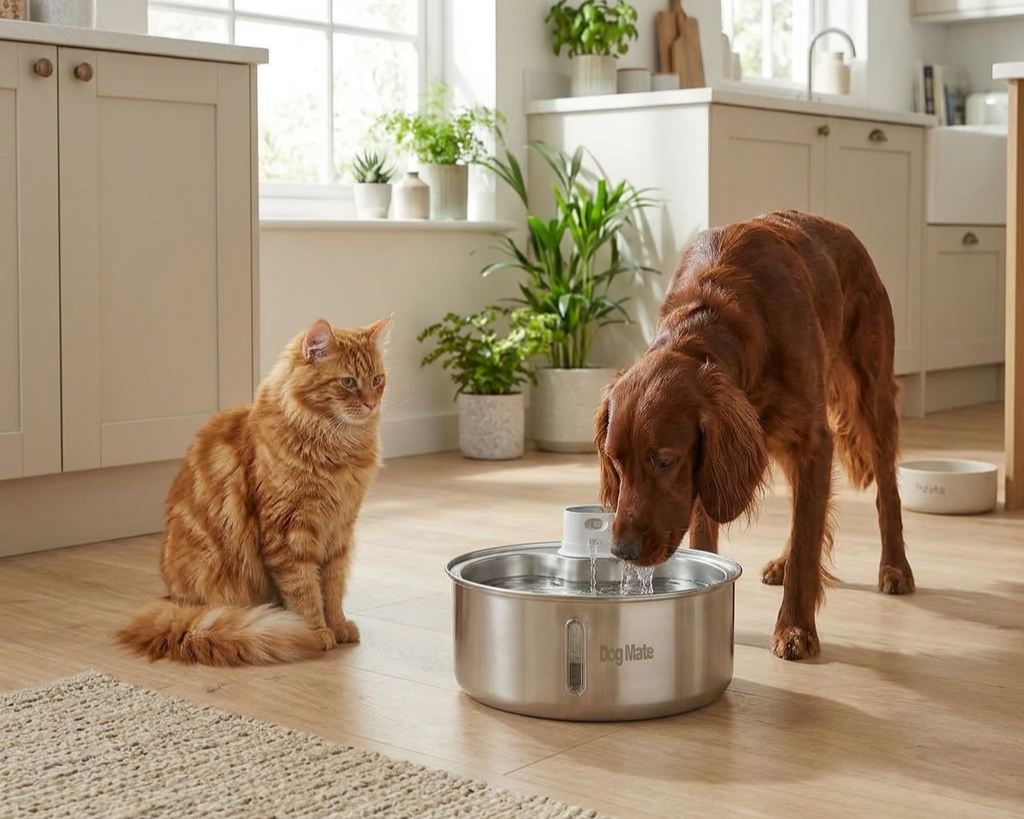
Our Dog Mate Stainless Steel Fountain is designed with dogs in mind — a generous 8l capacity, a stable base that won't shift during enthusiastic drinking, and the same food-grade materials throughout.
Stainless Steel Feeders: Consistent Hygiene at Every Meal
A good water fountain is only part of the picture. The bowl your pet's food is served in matters just as much.
Our automatic feeder range uses stainless steel bowls for exactly the same reasons — food stays in a neutral, clean environment from the moment it's dispensed to the moment it's eaten, with no odour retention and nothing to interfere with taste. For homes with multiple pets, this is particularly important. Shared feeding stations need to be genuinely hygienic, and stainless steel makes that easy to achieve.
Your Questions, Answered
Is stainless steel safe for cats and dogs? Absolutely. Food-grade stainless steel — the type used in all our stainless steel products — is entirely safe for pets. It's a fully inert, non-reactive material that meets the same standards used in professional food preparation. It won't affect the taste, smell, or safety of food or water.
How often should I clean a stainless steel fountain? We recommend a full clean once a week for most households — more often in homes with multiple pets or during warmer months. Because the surface is non-porous, a thorough weekly clean is all that's generally needed.
Will my cat actually use a water fountain? Most do, though some need a little time to adjust. Placing the fountain away from the food bowl tends to help — cats instinctively prefer to drink away from where they eat. Once they're comfortable, the majority use it regularly and drink more as a result.
What does food-grade stainless steel mean? Food-grade stainless steel (typically 304 grade, also known as 18/8) is highly corrosion-resistant, non-reactive with food and water, and completely safe for direct food contact — the same standard used in commercial kitchens and quality cookware.
A Small Decision That Makes a Real Difference
Choosing stainless steel for your pet's feeding and drinking equipment is one of those quiet decisions that tends to pay off over time — in hygiene, in how willingly your pet eats and drinks, and in how easy everything is to keep clean.
It's not about having the fanciest kit. It's about choosing materials that genuinely work well — for your pet, and for you.
We've put our full stainless steel range together in one place, from fountains to feeders and bowls. Everything is built to the same standard: food-grade materials, designed to last, and easy to live with every day.